Tire manufacturing is demanding by nature. Heavy loads, high temperatures, repetitive motion and complex machinery create an environment where safety risks are part of daily operations. At the same time, production targets continue to rise.
For tire manufacturers, safety is not only about compliance. It directly impacts uptime, workforce stability and long-term performance. When fatigue increases and manual handling dominates, variability and risk follow. According to Tapio Korkeamäki, Director, Tire Industry at Cimcorp, real change starts with redesigning the process itself.
“Safety improves when you remove people from the most physically demanding and hazardous tasks. Automation allows us to eliminate the risk at its source instead of managing the consequences,” he says.
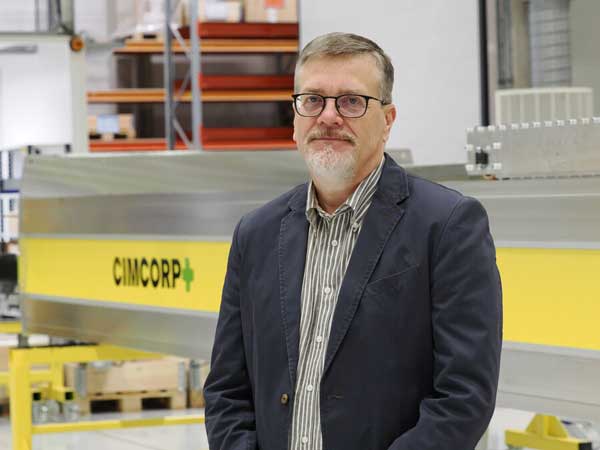
Tapio Korkeamäki, Director, Tire Industry at Cimcorp
Reducing risk through structural change
In traditional plants, employees lift and move heavy tires across large facilities, work close to curing presses and operate near moving equipment. Repetitive strain leads to musculoskeletal injuries. Exposure to dust, fumes and heat affects long-term health. Fatigue increases the likelihood of mistakes.
These are structural risks built into manual material handling.
With end-to-end tire handling automation, robotic systems manage the movement of materials from raw material storage to curing, testing and shipping. Software coordinates every step to ensure controlled, predictable flow.
When automation handles lifting and transfers, physical strain decreases. When employees operate at a safe distance from high-temperature and high-movement equipment, serious accident risks are reduced.
“Robots perform the same movement the same way every time,” Korkeamäki explains. “They don’t get tired, and they don’t take shortcuts. That consistency strengthens safety across the plant.”
Safety and performance go hand in hand
Automation standardizes safe handling procedures and reduces variability caused by fatigue or rushed operations. Integrated monitoring systems provide real-time visibility, enabling proactive intervention before issues escalate. The result is not only a safer workplace but also more stable operations. Lower injury rates support better attendance. Predictable material flow improves uptime and quality. Safety becomes a driver of reliability. “Safety is the foundation for scalable growth,” Korkeamäki says. “When your people are protected, your performance becomes more stable.”
Read the full eBook
If you want a deeper look at how automation reduces ergonomic strain, minimizes exposure to hazardous environments and builds safety into every stage of tire production, download the eBook Treading Safely: How automation enhances workplace safety in tire manufacturing.
Discover how you can protect your workforce while strengthening operational performance — today and for the future.